Sunday, February 20, 2011

Somewhere over the rainbow......... there's hope.

I find it ironic that I am following on from my previous post with this one; timing is everything in life. Sometimes when you become cynical, something lands in front of you which brings back your feeling of hope. Always remember, that you have to get the rain Before You Get The Rainbow.

I have received some fabulous emails in regards to my last post, and I thank the writers for all of them, the comments received, twitter messages and retweets. Your feedback and honesty was much appreciated:)


So, a few days after airing my frustration and disappointment at certain happenings within the wine industry (and not by any means, tied totally to the Barossa, if that was misinterpreted), I had the fabulous experience of what it is that I was trying to make you understand - the importance of working together in tough times.


Yesterday, on my day off from the Collective Barossa cellar door, I decided to go to the shop anyway, and take care of our guests who were coming for lunch, so that Mark from Gumpara Wines could focus on serving behind the counter. I enjoy working with Mark, and Steven of Kurtz Family Vineyards as we all share the same philosophies and always have lots of laughs, in between discussions on ideas for the future of our own wineries, and Collective Barossa.

Now, getting customers in for lunch and a wine-tasting may not sound like much of great interest but it was the steps that happened for them to get there that was relevant.

The customers were from Sydney, they were brought to us by a tour operator from the McLaren Vale region, the operator of which had collaborated with a bed and breakfast operator at Gumeracha, to bring the customers to visit not only our cellar door in Tanunda, but two other local wineries, a new beer shop and one of the local pubs on the other side of the Barossa (plus a few other retail stops in between). To top it off, said customers also had the pleasure of meeting a local tour operator who runs a horse and carriage business.

All in all, the most incredible example of people from many different regions, working together to provide visitors to our state with a personal and most memorable experience. By all accounts, the customers have already stated that they had an absolute ball during the entire trip, from start to finish. They personally told me that having Mark (from Gumpara) sit and chat to them (whilst I was preparing their lunch) was a highlight of their day, and they truly enjoyed his company. Everyone was happy; the customers felt that they had been spoilt, and numerous businesses had sales on the one day from these happy customers.

So how hard is it, really? That's right - it's not. I rest my case. I'm still cynical but know that there are many more opportunities like this, so will welcome any future ventures, and do my best to work with these like-minded business owners to enjoy what ultimately is about us all working to live, not living to work, and showing each other respect. Selah.


Wednesday, February 16, 2011

Fear & Loathing: A Savage Journey to the Heart of the Wine Industry.


I've been in the wine industry for just over five years, now, and have met some of the most incredible people that one could ever wish to meet. Life-long friends, with whom I will continue to share many fine moments, over incredible views, foods and wines. Lots of deep belly laughs, and moments that make life special. But for every good part of life, there are always disturbing ones. Moments that make you step back, and wonder.


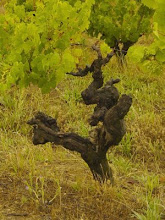
When Karra Yerta entered the wine-world, it was a tough time. Very tough, actually. I mistakenly saw it through rose-coloured glasses and can remember telling my husband of my plans to create a brand (he had been making wine for our own personal use for many years, but we had never sold any, nor applied for liquor licensing to do so to the public) and the words that came back to haunt me were "How hard can it be to sell three hundred cases of wine, a year?" That phrase bit me faster than a pile of bull-ants, my bare feet standing directly on top of their nest. I knew we had very, very good wines from an incredibly special old-vine vineyard but that was of no help. None.


I also had the support and advice from the very lovely James Lindner, of Langmeil Wines, and being a Barossa girl, whose parents had worked at Penfolds for almost thirty years each, an insight into the industry and many friends who were already involved either with the viticulture side, or the wine side. I had worked at Yalumba and Penfolds, myself, even. None of this helped much. Simply, despite the fact that I had not lived a sheltered life in any way (think hitch-hiking across the country at sixteen and partying like there was no tomorrow) I was in no way prepared for the savageness of the wine industry.

What I have realised in the past months, is that if I thought it was savage then, what has it become now? Savage doesn't even begin to describe it. Ask the vignerons who are still waiting for payment for their grapes from two years ago. Or the businesses that label or bottle wines, who are still chasing up payments from the wineries from last year, or ask the wineries who are owed tens of thousands of dollars from their distributors (the ones who refuse to answer phone calls or emails.) Or the wineries who make stupid and unprofessional errors in the process leaving people with wines who, maybe years after the wine-making, have a product that they have to recall. Or the wineries that process other honest people's grapes, make wine from it, charge top price and then when it is corked/exploding/damaged in some other way, take no responsibility whatsoever. Savage, I tell you. SAVAGE. And it's hurting families who are struggling to survive in this often, depraved and decadent industry.


If there's one thing that knocks one's confidence, it's being continually deceived and misled. Liars believe their own lies, and justify telling them by their own belief in their lies. Eventually, it makes you question your own integrity, and possibly, your sanity. The fact that grape-growers were handed Beyond Blue pamphlets (Beyond Blue is an Australian depression initiative) last year shows me that it's not only our farmers who are becoming suicidal, but now, we can add vignerons and dairy farmers to that equation. People who have worked their land for decades, being caught up in the abyss of deception.


But back to 2006. I recall the very embryonic stage of trying to sell our wines. The pressure was on - we had lots of stock, another vintage upon us, and my husband was wondering why I was not having any luck with getting our wines stocked anywhere. And I mean, anywhere. Thus, I set up a few appointments, one of which was the turning point of my entire life. The rudeness and arrogance of the people with whom I had said appointment devastated me.

The good thing about that experience was that it led me to a fellow called Philip White. In my wine-ignorant state, I had no idea who he was, as during his times of writing for 'The Advertiser', I was busy raising my children and doing volunteer work on School Councils and the like. Wine was not part of my life, in a business sense, until I hit the road trying to sell it. Via James Lindner, I managed to get hold of a list of people in the media who he suggested I contact in view to get our wines reviewed, in the hope of getting something in writing to back up their quality. The list intimidated me to no end, even though I only recognised a few names (James Halliday was one, I forget who the others were). I chose Philip White randomly. I sent him an email. When it bounced back, I turned into a nervous wreck as I simply couldn't handle HEARING any more rejection - I preferred to READ it.


To cut an already very long story short, I ended up having to call Philip (no way did I want to tell my husband when he got home from work that I had still not made any progress!) and before I knew it, I was in the car, wine in hand, and heading to Philip's residence to take him samples of our first ever Karra Yerta riesling and shiraz.


I was so anxious that I was almost beside myself, but I kept driving and hoping that by some act of God, all would go well. It did. Philip was most hospitable and invited me into his home so that he could taste the wines, there and then. As he did so, I told him of my last experience with the rude and arrogant people in Adelaide, and he quite rightly compared the entire experience to me being in a Reservoir Dogs situation. He was spot on. They were vicious -but in a silent, smiling, assassin kinda way - and almost made me give up. Philip actually wrote an article in the January 27-February 2, 2007 edition of 'The Independent Weekly' on our meeting and in it, mentioned the Reservoir Dogs. I wonder if they ever knew it was them that he was referring to. I have that same article laminated and hanging in my office. For many years, it was my inspiration to keep trying to get our wines 'out there'. It worked. In 2011, Karra Yerta is still in the game.


So, now we have the crux of this blog post. It was my own 'doggie situation' that has inspired this post, and this is why: I recently met a lovely young woman who lobbed quite unexpectedly on my own doorstep. She was flustered and dejected for she too, has been chewed up and spat out by retailers, distributors and no doubt, others on the winery side of the industry. I saw so much of myself (of five years ago) in her that I was still thinking about her last night when I went to bed, and again on waking this morning. On top of all the other things I have heard, witnessed or experienced recently, it was the final cherry on the top of the ugly - the Fear and Loathing - side of being in the wine industry.


Of course, I tried to help her, if only to explain that it was nothing that she was doing wrong, that it was just a savage market. I told her of my own experiences and gave her the addresses of certain wine-writers that I found to be most supportive of smaller wineries, and particularly of ones who really are passionate about their products (madly so, in fact, as the hope of profit surely gives us sleepless nights - what is profit? I am yet to find out!).


I think she was most surprised that I was sympathetic to her and her quest, but how could I not be? I could already see what she was facing before she told me. The stress showed on her face. Her pretty face and kind heart would only make it easier for those who enjoyed boosting their own egos at her expense. I have tried, and will continue to, try to help her. It's the least I can do.


I believe that the wine industry needs to have a good hard look at itself. I have worked hard for the past year, particularly, to not only promote the Barossa Valley as a region, but also to promote South Australian wines (I am not ashamed to admit that my favourite red wines are mostly from McLaren Vale, and why should I be? I also adore Clare and Eden Valley rieslings, if you really need to know). South Australia has so much to offer wine buffs - magnificent wines from the Coonawarra, McLaren Vale, Barossa, Eden Valley, Adelaide Hills, Langhorne Creek, Flinders Ranges, Clare, even Kangaroo Island - is it not better for us to work together than against each other? I do not understand how many people put up brick walls and just make life harder for themselves, and my 'good' wine friends, and me, in the long run. I don't drive a fancy car. I don't live in a fancy house. I like to think that I do not have a huge ego, and that I am helpful to people, not detrimental and deceptive. What I do have is a great circle of wine friends - other winery people, wine writers, customers etc and I feel truly blessed to have them in my life. It's a bloody hard industry to be in, and the sooner that people show some foresight and humility, the better. Then, many of us will be able to stop
Running Through The Jungle.

Saturday, February 12, 2011

Knock, knock, knocking on Heaven’s Door – Part 2

This blog post was originally written for, and published on "Barossa Dirt - True tales and twisted vines" in February 2011.

From left: James Linke, Andrew Graham, Bob McLean, Colin Sheppard, Chris Ringland.

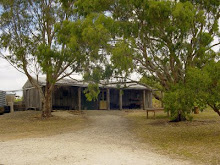
During the past few months, we have had the pleasure of the company of some wonderful visitors to our home. It’s so much fun to sit at the kitchen table in our old cottage, sharing fine wines and food, and getting to know each other face to face as opposed to electronic or phone conversations.

Each of these people has their own special reason for arriving on our doorstep, or indeed, in our neighbourhood, and it’s their own diverse reasons that will create my next few Barossa Dirt posts. The four subjects are all very interesting people – two are in the wine business in the USA, the other two are from Sydney – one involved with the wine business and the other with journalism.

My second interview is with Andrew Graham, who is a Sydney-based wine-writer (www.ozwinereview.com) and an enthusiastic and passionate wine-lover.

ML – What was the initial reason for your first ever trip, or contact, with the Barossa, and what year was it?

AG – Interestingly enough my first ever ‘serious’ wine was a Barossa Shiraz – it was the year 2000, and up until then I’d really just been a beer and spirit drinker. Wine had always been around my house, and cask wine had been a friend on more than one occasion, but I’d never really taken wine seriously. This wine was different though. It had the most luscious silky texture that I really loved. That wine was a 1998 St Hallett Faith Shiraz, and looking back I can understand exactly why I would have liked it – lots of flavour, lots of simple Barossan goodness.

ML – Which Barossan personalities have made a lasting impression on you?

AG – Charlie Melton is one person who first made an impression on me, with his sometimes laconic but always honest personality – and excellent moustache – epitomising of what I imagined great Australian winemakers to be. I like his wines, too. Bob McLean is another ‘larger than life’ character whom I very much respect due to his almost unrivalled knowledge of the area.

ML – What are some other interesting places you have been to in your travels, and/or which interesting people have you met elsewhere in the world?

AG – That’s an interesting question! Perhaps the best way to answer this would be to talk about the more interesting winemakers I have met, such as some Indian vignerons whom are working on one of the larger Indian vineyards. Their enthusiasm was unbridled, happily admitting that whilst their wines were still not quite there yet, that India would eventually become renown for it’s wines.

ML – Compared to some of these places, what makes the Barossa an appealing place to visit?

AG – One of the appealing things about the Barossa is simply how unlike most other Australian wine regions it seems to be. I’m sure it’s a cultural thing, driven by the old German heritage, but grape-growing and winemaking seems to carry even more significance in the Barossa, more respect even.

ML – What are your favourite Barossan places to visit and why?

AG – That’s an easy one. Flaxmans Valley is the most attractive part of the Barossa. It’s the extra lushness and greenery, that comes courtesy of Kaiser Stuhl Conservation Park in part, that makes it feel that much more natural and peaceful. It’s colder though, which I’m no fan of as I’m a warm blooded Sydney man who doesn’t deal well with cold!

ML – Do you have any favourite Barossa foods or wines?

AG – Did someone say Linke’s bacon? Barossan smallgoods are the picks in the food department. Eden Valley Riesling is not the ideal smoked meats match, but it does refresh…

It was a pleasure having Andrew visit, and we look forward to his next trip to the Barossa. My next post will feature a very interesting couple from the United States. Stay tuned.

Cheers for now,

Marie Linke

Tiny URL for this post: http://tinyurl.com/4nex2ys

Monday, December 27, 2010

Knock, knock, knocking on Heaven’s Door – Part 1

This blog post was originally written for, and published on "Barossa Dirt - True tales and twisted vines" in November 2010.

From left: Don Ross (Secretary of the Barossa Valley Archives & Historical Trust), Carl Holm

During the past few months, we have had the pleasure of the company of some wonderful visitors to our home in this magnificent part of the Barossa Ranges, which my husband refers to as ‘God’s Country’. It’s so much fun to sit at the kitchen table in our old cottage, sharing fine wines and food, and getting to know each other ‘face to face’ as opposed to electronic or phone conversations.

Each of these visitors has their own special reason for arriving on our doorstep, or indeed, in our neighbourhood, and it’s their own diverse reasons that will create a segment of my Barossa Dirt posts. The four subjects are all very interesting people – two are in the wine business in the USA, the other two are from Sydney – one involved with the wine business and the other with journalism.

My first interview is with Carl Holm, who is a Sydney-based freelance journalist. He has a passionate interest in German history and has visited the Barossa twice in 2010.The photo above is of Carl (at right) with Don Ross, who is the Secretary of the Barossa Archives and Historical Trust. The photo was taken inside of the Barossa Museum.

ML – What was the initial reason for your first ever trip, or contact, with the Barossa, and what year was it?

CH - I was collecting audio material for a radio documentary for Radio Deutschewelle, Germany’s international broadcaster, in February 2010.

ML – Which Barossan personalities have made a lasting impression on you?

CH – Peter and Margaret Lehmann, because they are very funny and pull no punches. They also fire off of each other when you speak to them together.

ML – What are some other interesting places you have been to in your travels, and/or which interesting people have you met elsewhere in the world?

CH – I worked in Germany for three and a half years, and in the process fell in love with France. I also love the Czechs for their ‘gallows’ humour.

ML – Compared to some of these places, what makes the Barossa an appealing place to visit?

CH – The time that I spent in Germany gave me an interest to investigate the waves of German immigration and the Barossa Valley is part of that.

ML – What are your favourite Barossan places to visit and why?

CH – The smaller wineries that have exclusive products that are not readily available outside of the Barossa. I like visiting old churches and cemeteries. One day I would like to come back with a tent and a motorcycle and see it from a different perspective, again.

ML – Do you have any favourite Barossa foods or wines?

CH – Wines: Henschke Pinot Gris, Kies Family 2000 Dedication Shiraz. Food: The kangaroo fillet from the Tanunda Clubhouse.

ML – What is the appeal of Flaxmans Valley to you?

CH – The only banjos you hear of a night-time are the banjo frogs.

ML – Thank you, Carl for answering these questions, and for being a fan and advocate of the Barossa.

Cheers for now,

Marie Linke

Tiny URL for this post: http://tinyurl.com/2apmy43

The importance of being earnest.

This blog post was originally written for, and published on "Barossa Dirt - True tales and twisted vines" in September 2010.


ear·nest 2 (ûrnst) n. 2. A token of something to come; a promise or an assurance.

The name ‘Barossa’ is quite well-known, and its adjacent GI, Eden Valley, despite having some rare, very old vineyards, could be considered one of the new kids on the block as far as global public recognition goes. But somewhere in between these amazingly beautiful, yet different GI’s is a secret sub-region. Despite a variable grape production since the 1860’s (starting with currants being grown), it is only in the very recent past that Flaxman’s Valley has begun to emerge publicly as the quiet, mysterious, yet stunning and very special wine-producing place that I have been fortunate enough to live in since 1985.

A special ridge exists in the northern part of Flaxman’s Valley. It stretches from Bob and Wilma McLean’s property on the northern tip (the McLean’s property was one of my ancestors original homesteads), to the southern tip where the famous Heggies and Pewsey Vale vineyards lie. This ridge is bordered by the Kaiser Stuhl Conservation Park, with the Tanunda Creek weaving a well-worn path through properties and park alike as it heads to the west, down Menglers Hill to meet the Para River. In between these two tips are the miniscule settlements of Randall-Town and Argent-Town, aptly named after the families that settled there in the early 1900’s.

The Randall families planted vines and fruit trees on settlement. They worked the vineyards passionately for numerous decades. A kilometre to the south, the Argent families did the same thing. The old vines tended by the Randall families by hand, are now the grapes behind the Ringland Vintners, Hobbs Vintners and Karra Yerta Wines brands. Further to the south, the remaining Argent vineyard provides the bulk of the Flaxman Wines portfolio. Vineyards planted by my own ancestors existed on the (now) McLean’s property until the vine-pull scheme of the eighties (the previous owners pulled out the precious old vines). Bob and Wilma McLean have since replanted, thankfully.

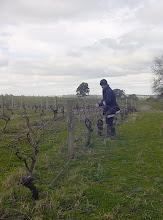
The wines that are produced from this ridge are incredibly special, and as there is not a mains water supply at all in the area, even for housing, most of the vineyards are dry-grown aside from the very rare watering in major heat-waves by irrigation from small dams or bores. Irrigation is not a major part of the care-taking of these vineyards as the region itself has a very high rainfall average (around twenty-eight inches). Most of the vines are so old and deep-rooted that they seem to fare very well in the extremes of the South Australian summers. Not to forget that while the Barossa Valley floor sizzles, it is usually at least a few degrees cooler in the Barossa Ranges. On forty-five degrees celcius days, that can make a huge difference to survival of canopies, and subsequent grape protection from the elements.

But there are always exceptions to the rule of a hot, dry, Barossan summer. In January 2007 we had almost two inches of gentle rain which made for an exceptional vintage. Our 2007 Karra Yerta Riesling remains one of our best produced yet.

The wines from this ridge will continue to impress for many decades to come. I can assure you of that. Some of the special visitors that we get to the region also confirm it, but more about that in one of my next posts.

Cheers for now,

Marie Linke

Tiny URL for this post: http://tinyurl.com/28yc5gd