Showing posts with label Flaxmans Valley. Show all posts

Saturday, February 12, 2011

Knock, knock, knocking on Heaven’s Door – Part 2

This blog post was originally written for, and published on "Barossa Dirt - True tales and twisted vines" in February 2011.

From left: James Linke, Andrew Graham, Bob McLean, Colin Sheppard, Chris Ringland.

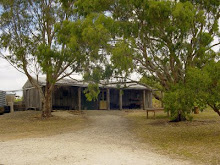
During the past few months, we have had the pleasure of the company of some wonderful visitors to our home. It’s so much fun to sit at the kitchen table in our old cottage, sharing fine wines and food, and getting to know each other face to face as opposed to electronic or phone conversations.

Each of these people has their own special reason for arriving on our doorstep, or indeed, in our neighbourhood, and it’s their own diverse reasons that will create my next few Barossa Dirt posts. The four subjects are all very interesting people – two are in the wine business in the USA, the other two are from Sydney – one involved with the wine business and the other with journalism.

My second interview is with Andrew Graham, who is a Sydney-based wine-writer (www.ozwinereview.com) and an enthusiastic and passionate wine-lover.

ML – What was the initial reason for your first ever trip, or contact, with the Barossa, and what year was it?

AG – Interestingly enough my first ever ‘serious’ wine was a Barossa Shiraz – it was the year 2000, and up until then I’d really just been a beer and spirit drinker. Wine had always been around my house, and cask wine had been a friend on more than one occasion, but I’d never really taken wine seriously. This wine was different though. It had the most luscious silky texture that I really loved. That wine was a 1998 St Hallett Faith Shiraz, and looking back I can understand exactly why I would have liked it – lots of flavour, lots of simple Barossan goodness.

ML – Which Barossan personalities have made a lasting impression on you?

AG – Charlie Melton is one person who first made an impression on me, with his sometimes laconic but always honest personality – and excellent moustache – epitomising of what I imagined great Australian winemakers to be. I like his wines, too. Bob McLean is another ‘larger than life’ character whom I very much respect due to his almost unrivalled knowledge of the area.

ML – What are some other interesting places you have been to in your travels, and/or which interesting people have you met elsewhere in the world?

AG – That’s an interesting question! Perhaps the best way to answer this would be to talk about the more interesting winemakers I have met, such as some Indian vignerons whom are working on one of the larger Indian vineyards. Their enthusiasm was unbridled, happily admitting that whilst their wines were still not quite there yet, that India would eventually become renown for it’s wines.

ML – Compared to some of these places, what makes the Barossa an appealing place to visit?

AG – One of the appealing things about the Barossa is simply how unlike most other Australian wine regions it seems to be. I’m sure it’s a cultural thing, driven by the old German heritage, but grape-growing and winemaking seems to carry even more significance in the Barossa, more respect even.

ML – What are your favourite Barossan places to visit and why?

AG – That’s an easy one. Flaxmans Valley is the most attractive part of the Barossa. It’s the extra lushness and greenery, that comes courtesy of Kaiser Stuhl Conservation Park in part, that makes it feel that much more natural and peaceful. It’s colder though, which I’m no fan of as I’m a warm blooded Sydney man who doesn’t deal well with cold!

ML – Do you have any favourite Barossa foods or wines?

AG – Did someone say Linke’s bacon? Barossan smallgoods are the picks in the food department. Eden Valley Riesling is not the ideal smoked meats match, but it does refresh…

It was a pleasure having Andrew visit, and we look forward to his next trip to the Barossa. My next post will feature a very interesting couple from the United States. Stay tuned.

Cheers for now,

Marie Linke

Tiny URL for this post: http://tinyurl.com/4nex2ys

Monday, December 27, 2010

The importance of being earnest.

This blog post was originally written for, and published on "Barossa Dirt - True tales and twisted vines" in September 2010.


ear·nest 2 (ûrnst) n. 2. A token of something to come; a promise or an assurance.

The name ‘Barossa’ is quite well-known, and its adjacent GI, Eden Valley, despite having some rare, very old vineyards, could be considered one of the new kids on the block as far as global public recognition goes. But somewhere in between these amazingly beautiful, yet different GI’s is a secret sub-region. Despite a variable grape production since the 1860’s (starting with currants being grown), it is only in the very recent past that Flaxman’s Valley has begun to emerge publicly as the quiet, mysterious, yet stunning and very special wine-producing place that I have been fortunate enough to live in since 1985.

A special ridge exists in the northern part of Flaxman’s Valley. It stretches from Bob and Wilma McLean’s property on the northern tip (the McLean’s property was one of my ancestors original homesteads), to the southern tip where the famous Heggies and Pewsey Vale vineyards lie. This ridge is bordered by the Kaiser Stuhl Conservation Park, with the Tanunda Creek weaving a well-worn path through properties and park alike as it heads to the west, down Menglers Hill to meet the Para River. In between these two tips are the miniscule settlements of Randall-Town and Argent-Town, aptly named after the families that settled there in the early 1900’s.

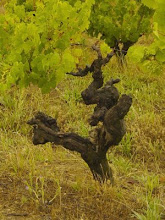
The Randall families planted vines and fruit trees on settlement. They worked the vineyards passionately for numerous decades. A kilometre to the south, the Argent families did the same thing. The old vines tended by the Randall families by hand, are now the grapes behind the Ringland Vintners, Hobbs Vintners and Karra Yerta Wines brands. Further to the south, the remaining Argent vineyard provides the bulk of the Flaxman Wines portfolio. Vineyards planted by my own ancestors existed on the (now) McLean’s property until the vine-pull scheme of the eighties (the previous owners pulled out the precious old vines). Bob and Wilma McLean have since replanted, thankfully.

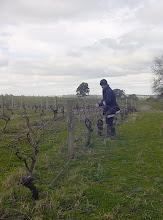
The wines that are produced from this ridge are incredibly special, and as there is not a mains water supply at all in the area, even for housing, most of the vineyards are dry-grown aside from the very rare watering in major heat-waves by irrigation from small dams or bores. Irrigation is not a major part of the care-taking of these vineyards as the region itself has a very high rainfall average (around twenty-eight inches). Most of the vines are so old and deep-rooted that they seem to fare very well in the extremes of the South Australian summers. Not to forget that while the Barossa Valley floor sizzles, it is usually at least a few degrees cooler in the Barossa Ranges. On forty-five degrees celcius days, that can make a huge difference to survival of canopies, and subsequent grape protection from the elements.

But there are always exceptions to the rule of a hot, dry, Barossan summer. In January 2007 we had almost two inches of gentle rain which made for an exceptional vintage. Our 2007 Karra Yerta Riesling remains one of our best produced yet.

The wines from this ridge will continue to impress for many decades to come. I can assure you of that. Some of the special visitors that we get to the region also confirm it, but more about that in one of my next posts.

Cheers for now,

Marie Linke

Tiny URL for this post: http://tinyurl.com/28yc5gd

Monday, September 6, 2010

History never repeats.

I'm having a bit of a Split Enz moment tonight - if you aren't familiar with the song 'History never repeats' then you should listen to it here. Split Enz were one of my favourite bands in the eighties and I find them (and the Finn brothers' offshoot, Crowded House) rather inspiring to listen to, when I am writing.

Speaking of inspiring, opening the Collective Barossa shop in the magnificent historical landmark c.1866 building which houses the Barossa Museum in Tanunda, was serendipity as far as the continuing journey to write my first (published) book. I have dreamt of writing this particular book for at least five years, and whilst I had the basic concept of it in my head, I had been unable to find a starting point in many ways; the format, the publishing and a sense of confusion as to how I was going to expand on the very early history of the region with little experience of digging so deeply through archives, and not having the time to do so. So by having a shop in the Museum (also the Barossa Valley's first Post Office and Telegraph Station) and walking regularly past the amazing array of historical items whenever I venture to the toilets or glass washing area, I have found the encouragement to begin working on what will no doubt be a very rewarding project.


As my ancestors were the third largest landholders in the Flaxman's Valley area until the very early 1900's, I have long been curious as to how the land was divided up, and how much of it is still in the hands of generations descended from these first families. Some of the (previously) well-known families of this region (which I have lived in since 1985) such as Argent and Randall, married into my ancestors families, and small sections of the region were even named after them i.e Argent-Town and Randall-Town. The past fifteen years or so have seen most of these families leave the region, and with many newcomers to the area, our history was slowly being lost, and this is what gave me the original idea of recording what I could, whilst some of these family members were still alive and able to contribute to what will possibly be the first book dedicated to this region.


My landlords of the Collective Barossa shop are the small and amazing group of people who dedicate their time, on a voluntary basis, under the banner of the Barossa Valley Archives and Historical Trust. Since 1963, when the Trust was formed (due to concerns that the Barossa was fast succumbing to development and the subsequent loss of our valuable historical buildings and items) the members of the Trust have preserved an incredible array of anything and everything that relates to the Barossa and its German heritage. Many of them have recorded some of the informaton in a collection of historical books and their passion and skills are second to none.

I have enlisted the help of one of the members, Mr. Reg Munchenberg, to help me in researching information to write an accurate account of what the Flaxman's Valley area was like from settlement in the late 1840's to the early 1900's. Reg is a wealth of information and his experience in historical research is truly amazing. I thank him sincerely for his assistance, and have no doubt that without it, I would never have been able to get this project started so soon. It is really important to me that some of the older generation - my former neighbours in the area in the 1980's - get to see this book finished as they have already shown such excitement at the prospect, and gratitude to me, even in this very embryonic stage. Earlier in the year I sent out questionnaires to former residents to see if they were interested in participating, and I was thrilled to check my mail and see the completed questionnaires, copies of photos and heartfelt notes enclosed. I feel privileged to have lived out here early enough to have seen the lifestyle that was so simple and different to what it has become over the past fifteen years.


The photo below is of Reg with some of the information he has already collated for me. Now, in my spare time, I get to the fun part of reading it all, cross-referencing and formatting it into a very interesting beginning to my book. I look forward to the day when I can proudly announce that "Tales from Bullfrog Flat" is published and ready to read:)


Saturday, November 8, 2008

Going back to the roots of my family and the Flaxmans Valley area

I always thought it was quite ironic that I ended up living near a road with my name (well, my maiden name, Pohlner) on it. On this road is a cottage, now renovated (and extended) and renamed "Naimanya" but for many, many years it was known as one of the Pohlner cottages. There is another Pohlner cottage further to the north about 5km and only a few km to the east of that one, still stands the original Pohlner homestead - a magical place now home to Bob and Wilma McLean of McLean's Farm Wines.

As a young girl I often heard mention of "Pohlner's Scrub" which was up high in the Barossa Ranges around the Menglers Hill area. A lot of what is now known as the Kaiser Stuhl Conservation Park was originally part of the Pohlner land-holding and a controversial row arose around 1984 when the site was considered for the open-range zoo and sanctuary which was later located at Monarto.

The Pohlners were the third largest land holders in the Menglers/Flaxmans Valley area in the 1900's (after the Evans and Angas families). In 1910 Charlie Pohlner still owned between 4000 and 7000 acres but unfortunately over time, the land was broken up and sold off (or divided up due to marriages) to other now well-known families in the area(s): Argent, Randall, Zander and Thorn.


I am still tracing the family history back to the beginnings of our settlement of this area and this will take some months but I have been told that Charlie was also a councillor on the Flaxmans Valley Council. I am not certain when the FV Council disbanded but there is a plaque at Craneford (Lander's Corner) which is where the Flaxman's Valley Council used to be located. It will certainly be an interesting journey researching all the history but already I understand now why I feel so at home out here "in the hills" and how lucky I am to be of the same blood line that saw the beauty of the area over one hundred and fifty years ago and did such a wonderful thing by preserving a lot of it so that we can now enjoy it as a National Park.